
Children with autism often come with a complex mix of traits, and sometimes, an unexpected companion: hypermobility. In this post, we’ll explain what hypermobility autism spectrum disorder means, why the overlap matters, how it can affect everyday life, and what you can do. We’ll also show how Leaping Kids’ specialist physiotherapy services support families navigating both autism and joint hypermobility.
What Is Hypermobility?
In the simplest terms, hypermobility refers to joints that move beyond what is considered the “normal” range. This could mean a child’s knee bends backward slightly, or their fingers bend more than usual. Joint hypermobility (JH) describes one or more joints moving beyond their typical range, either actively or passively.
When hypermobility starts causing symptoms, pain, joint instability, fatigue, it may fall under the umbrella of hypermobility spectrum disorder (HSD) or related conditions such as hypermobile Ehlers-Danlos syndrome. These are more than just “being bendy”, they involve underlying connective tissue, proprioception, and muscular control challenges.
The Link Between Hypermobility and Autism Spectrum Disorder
You might wonder: are they just coincidental? A research suggests otherwise. There appears to be a significantly higher prevalence of joint hypermobility in people with autism than in the general population.
For example, a study of children found that joints in children with ASD were “significantly more supple” compared to typically developing peers. Another systematic review indicated that generalised joint hypermobility (GJH) is overrepresented in autism populations.

What might explain this overlap?
- Connective tissue and collagen differences: In some children, structural differences in collagen or connective tissues may lead to both joint laxity and other systemic effects.
- Nervous system regulation: Autonomic or sensory regulation systems may be less stable, affecting muscle tone, proprioception, and joint control.
- Shared genetic vulnerability: Some genes implicated in neurodevelopment may also influence connective tissues or neuromuscular function.
- Sensory and motor integration: Sensory sensitivities common in autism may interact with hypermobility. E.g. poor proprioceptive feedback, making joint control harder.
Because of this overlap, some researchers propose viewing hypermobility spectrum disorder and autism as conditions that can influence and amplify each other, rather than being entirely separate.
Shared Symptoms, Overlapping Challenges
When a child has both hypermobility and autism spectrum disorder, certain challenges are more likely to co-occur. Recognising these overlapping symptoms is key to understanding how to help.
- Sensory sensitivities & proprioceptive differences. A hypermobile joint sends less consistent feedback about body position; combined with sensory processing differences in autism, this can lead to clumsiness, over or undersensitivity to touch or movement.
- Fatigue. Stability requires more muscular effort in hypermobile joints. Children might tire more quickly in physical tasks.
- Motor coordination issues. Gross motor skills (running, jumping) or fine motor tasks (writing, buttoning) can be harder. In ASD more broadly, motor delays or Developmental Coordination Disorder often co-occur.
- Anxiety and pain. Pain from joints or soft tissues can exacerbate stress or anxiety, which is already common in autism populations.
- Postural instability. Slouching, “floppy” posture, or compensatory muscle patterns are often seen, especially when the child is tired or under sensory stress.
Because of these overlapping traits, it can be tricky to tease apart which challenges stem from autism, from hypermobility, or from their interaction. That’s why a nuanced, individual assessment is essential.
How Hypermobility Impacts Daily Life for Children on the Autism Spectrum
When hypermobility overlaps with autism, the effects ripple through many everyday areas:
- Movement & posture: Children may struggle to maintain an upright posture, sustain weight-bearing, or manage transitions (e.g. standing up, crouching).
- Joint pain & discomfort: Over time, joints that move excessively may suffer strain on ligaments, muscles or soft tissues, producing aches or even frequent sprains.
- Reduced participation in physical play: Sports, running,and climbing may be limited due to instability or fear of injury.
- Fine motor tasks: Tasks like handwriting, cutting, buttoning clothes, or manipulating small objects may suffer because joints are “looser” and harder to control.
- Endurance & fatigue: Activities that peers take for granted can exhaust a hypermobile child quickly.
- Emotional and behavioural consequences: Pain, frustration, or failure in physical tasks may heighten emotional dysregulation, avoidance or withdrawal.
All of these factors can compound other autism-related challenges, making everyday participation harder and contributing to secondary issues like low self-esteem, social exclusion or anxiety around movement.
Recognising Signs of Hypermobility in Children with ASD
Since many children with autism already present with motor differences, recognising hypermobility autism spectrum disorder early is crucial. Some red flags may include:
- Recurrent subluxations, joint “clicking” or discomfort
- Frequent bruises or soft tissue injuries
- Complaints of aches or pain after play (especially overnight)
- “Floppy” or slumped posture
- Unusual ease in flexibility (e.g. hyperextended knees, elbows)
- Poor balance, trips or falls more than peers
- Fatigue after physical tasks
- Avoidance or withdrawal from active play
Because hypermobility & connective tissue disorders are often under-recognised, a physiotherapist or allied health professional can use tools like the Beighton score (a 9-point hypermobility screen) to assess joint laxity. If positive, a more comprehensive evaluation and differential diagnosis (e.g. hypermobility spectrum disorder, Ehlers-Danlos syndrome) may follow.
Early identification matters: with early support, you can reduce pain, preserve joint integrity, and build stronger motor foundations before compensatory patterns or injuries become entrenched.
Therapy and Management Strategies
Managing hypermobility in autism is not about “curing” hypermobility; it’s about building strength, control and confidence. Here’s how:
Physiotherapy
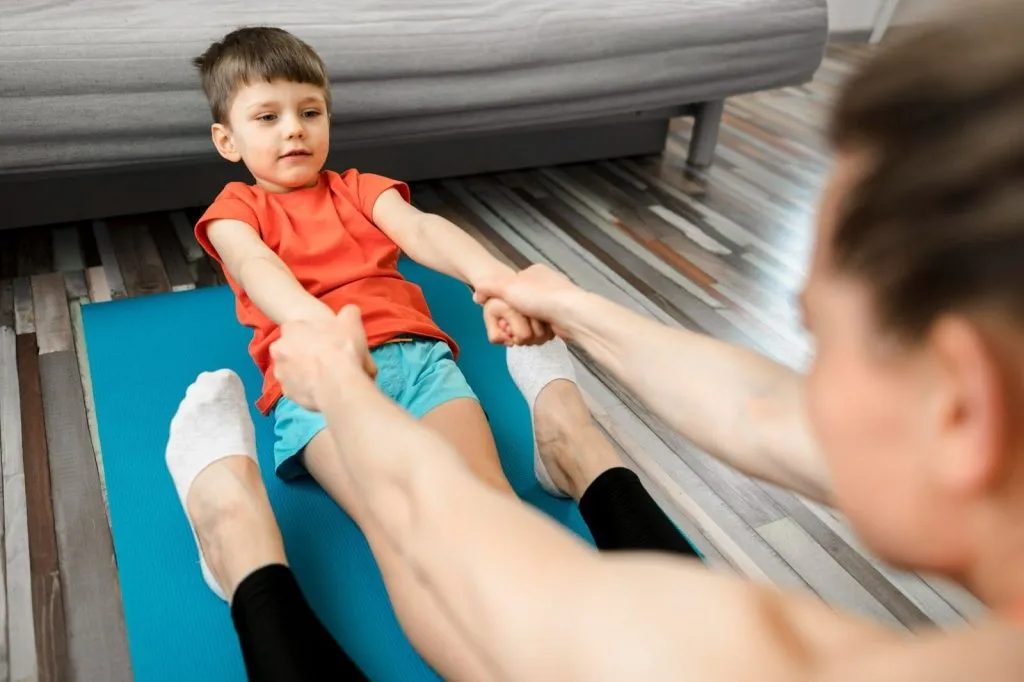
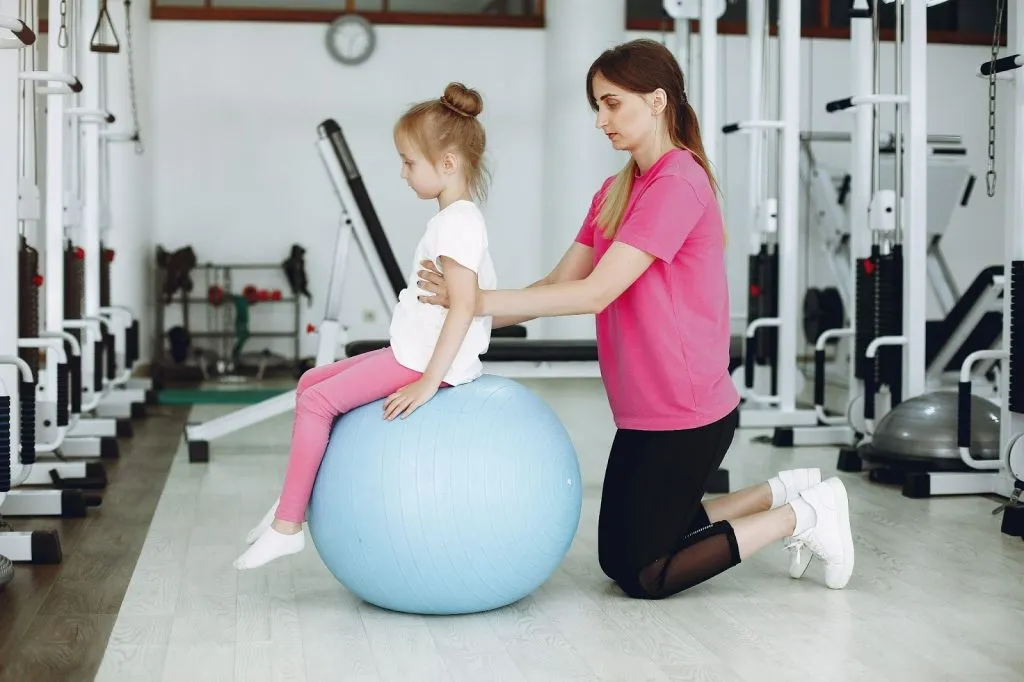
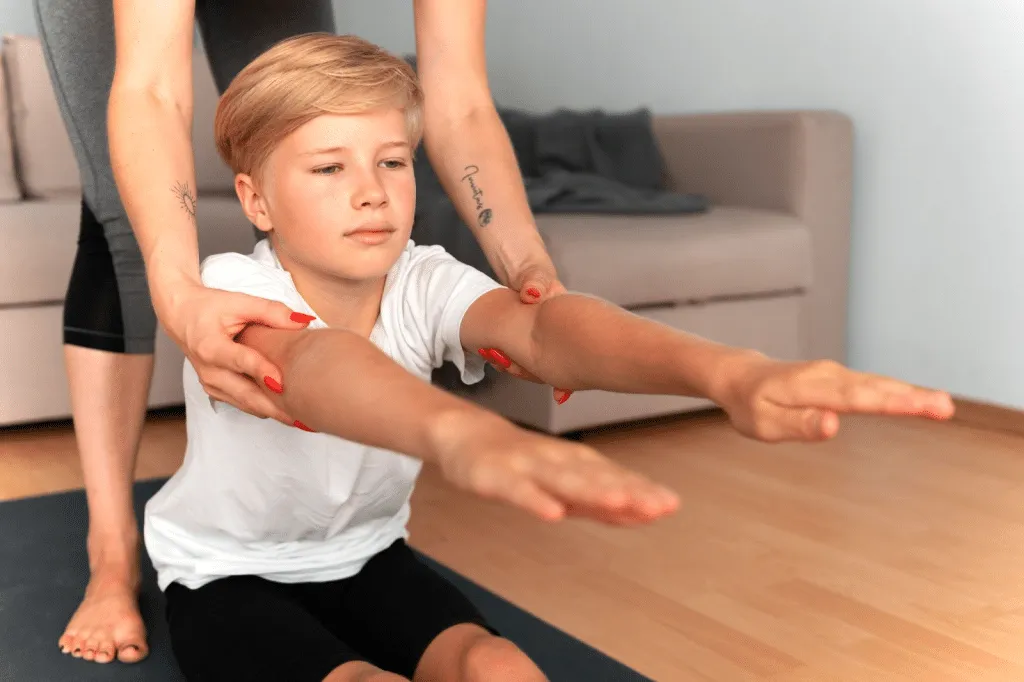
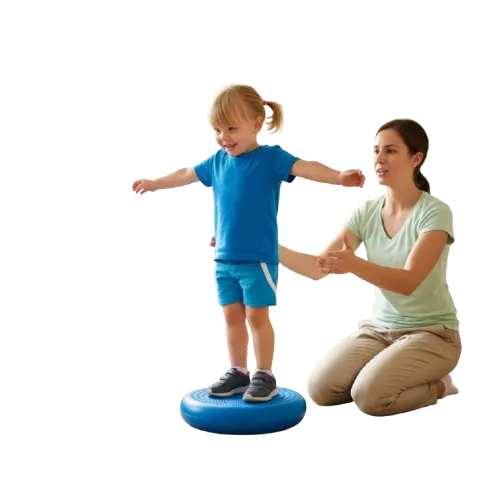
- Targeted exercise programs focusing on joint stability, core strength, postural control, balance and proprioception
- Low-impact strength training (e.g. resistance bands, pilates-style work)
- Gentle manual therapy, taping, bracing for support when needed
- Education to child and caregivers about joint loading, safe movement, pacing and body awareness
- Progression to more dynamic, play-based challenges
Occupational Therapy
- Focused on fine motor control, hand strength, sensory integration, motor planning, and adaptive strategies
- Tools like weighted utensils, supportive grips, alternative writing tools or splints
- Strategies to manage fatigue and task breakdown
Supportive Movement Programs
- Activities like aquatic therapy, swimming, gentle yoga, or pilates which impose low joint stress
- Structured movement breaks, proprioceptive-rich play (climbing, obstacle courses, weighted play)
- Graded activity plans to manage boom-and-bust cycles of overexertion and fatigue
Therapy must always be individualised, child-led and fun, especially when working with children on the autism spectrum disorder. Because Leaping Kids centres its approach on play, early intervention, and delivering therapy in familiar settings (home, school), your child can progress in comfort and confidence.
Supporting Children at Home and in School
You don’t need a therapy room to make a difference. Here are ways parents, carers and schools can help:
- Movement breaks: Short, scheduled active breaks during classes help reset muscles and joints
- Sensory and proprioceptive input: Use of compression garments, weighted blankets or vests, pushing/pulling tasks
- Modify seating or desk setup: Supportive chairs, cushions, tilt desks or footrests
- Alternate tasks: Alternate sitting and standing; break motor tasks into smaller chunks
- Encourage inclusive play: Select games that build strength and coordination but reduce injury risk
- Teach pacing and self-monitoring: Help children recognise early fatigue or discomfort
- Use NDIS funding: Under the NDIS, children may be eligible to receive support for therapy sessions, equipment or home modifications.
In school settings, teachers and aides can adopt these supports, collaborate with therapists to implement movement plans, and adjust expectations around physical tasks.
The Value of Interdisciplinary, Holistic Care
Because hypermobility autism spectrum disorder sits at the intersection of neuromotor, connective tissue, sensory and developmental systems, it demands an interdisciplinary approach:
- Physiotherapists (for movement, stability, strength)
- Occupational therapists (for sensory, fine motor, adaptation)
- Paediatricians and general practitioners (for medical oversight or differential diagnosis)
- Autism specialists (for behavioural, social and sensory strategies)
- Speech pathologists, psychologists, dietitians (as needed, for holistic support)
At Leaping Kids, Natasha Ardiles (B.Med.Sc., M.Phty) leads a team that collaborates closely across disciplines. We prioritise family engagement, delivering therapy in-home or in-school, and integrating motor work into meaningful life tasks. Because complex challenges are best met with coordinated care.

How Leaping Kids Can Help
If your child sits somewhere between autism and hypermobility, you aren’t alone, and help is not only possible. Recognising hypermobility autism spectrum disorder early gives your child a head start in building motor resilience, reducing pain, and nurturing confidence in movement.
At Leaping Kids, we specialise in paediatric physiotherapy, early intervention and NDIS-funded in-home or in-school therapy. We work collaboratively with you, your child, and your broader care team to build custom movement, coordination and posture programs that fit within daily life. If you’d like a guide through assessment, tailored therapy or joint support strategies, we’re here to walk that journey beside you.
Let’s help your child move with confidence, stability and joy.