
If you’re a parent exploring support options for your child’s developmental needs, you’ve probably come across NDIS for children. In this guide, we’ll walk you through what the NDIS means for kids, who’s eligible, how therapy and equipment funding works, and how to apply. We’ll also show how Leaping Kids’ paediatric physiotherapy services align perfectly with NDIS support for children.
What is the NDIS for children?
The National Disability Insurance Scheme (NDIS) is Australia’s system for funding support and services when someone has a permanent and significant disability or developmental delay.
When used in relation to kids, NDIS for children refers to how that scheme helps younger people access the therapies, equipment, and supports they need so they can grow, learn, and participate in everyday life. In simple terms, it gives families financial support to get specialist help (such as physiotherapy, occupational therapy, speech therapy) when developmental challenges arise.

Because early years are crucial, the NDIS provides a pathway (known as ECEI) for younger children and a broader access process for older children.
Who Qualifies for NDIS Support?
Early Childhood / ECEI Pathway (for younger children)
If your child is under about 7 (or under 9 in some jurisdictions under the newer early childhood approach) and shows signs of developmental delay or disability, they may be eligible for NDIS for children via the Early Childhood Early Intervention (ECEI) pathway.
Under this pathway:
- A formal medical diagnosis is not always required (for children under 6).
- You can contact your local early childhood partner to assess needs and connect you with supports.
- The focus is on early intervention, capacity building, and short-term supports to help your child and family.
From mid-2023, the early childhood approach in many places now covers children under 9 with disability, making the age range more flexible.
General NDIS Access (for older children)
For children above that early childhood age threshold (or children whose needs are ongoing and substantial), they’ll typically go through the general NDIS access pathway. To qualify:
- The child must meet residency/citizenship criteria (Australian citizen, permanent resident or certain visa types).
- They must have or be assessed to have a permanent impairment or developmental condition.
- That condition must have a functional impact on their daily life (mobility, communication, learning, self-care, etc.).
If the child meets those criteria, they can become an NDIS participant and receive a plan.
What Supports Can the NDIS Fund?
One of the strengths of NDIS for children is its flexibility to fund supports that are considered reasonable and necessary. Some of the supports you may see include:
- Physiotherapy (paediatric physiotherapy)
- Occupational therapy
- Speech pathology
- Assistive technology and equipment (e.g. mobility aids, orthotics, home modifications)
- Home or school-based therapy supports
- Behaviour support, supervision, or specialised support
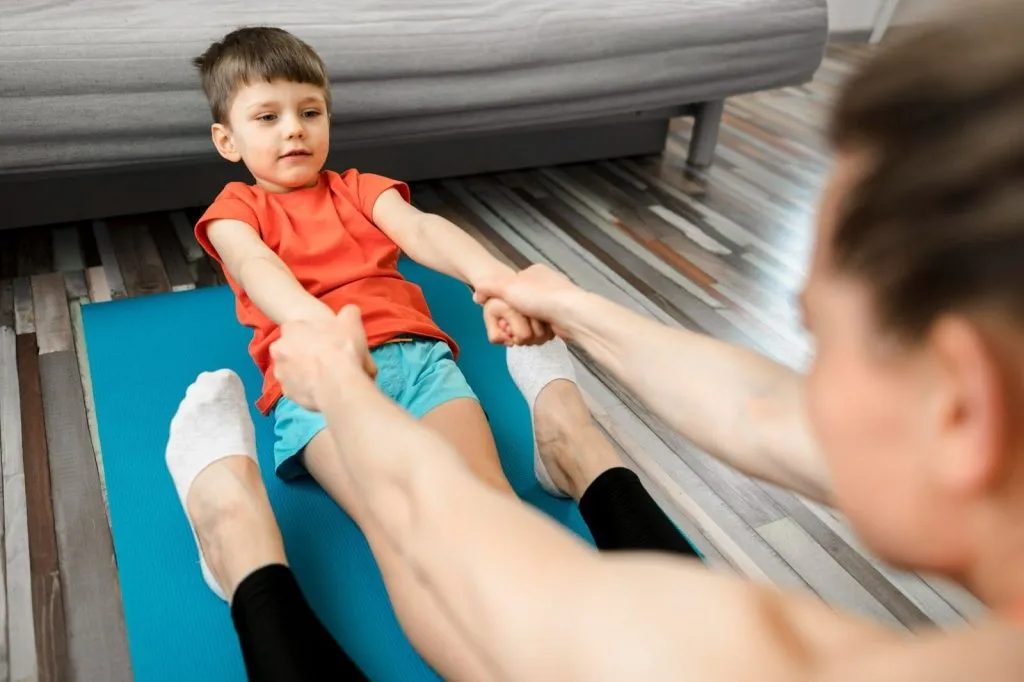
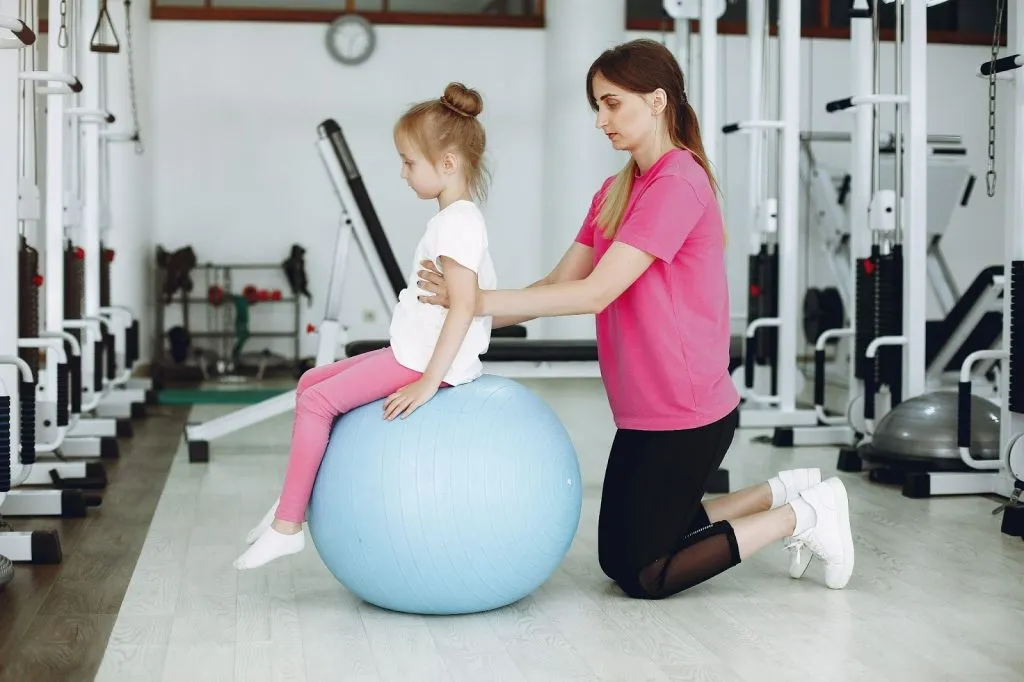
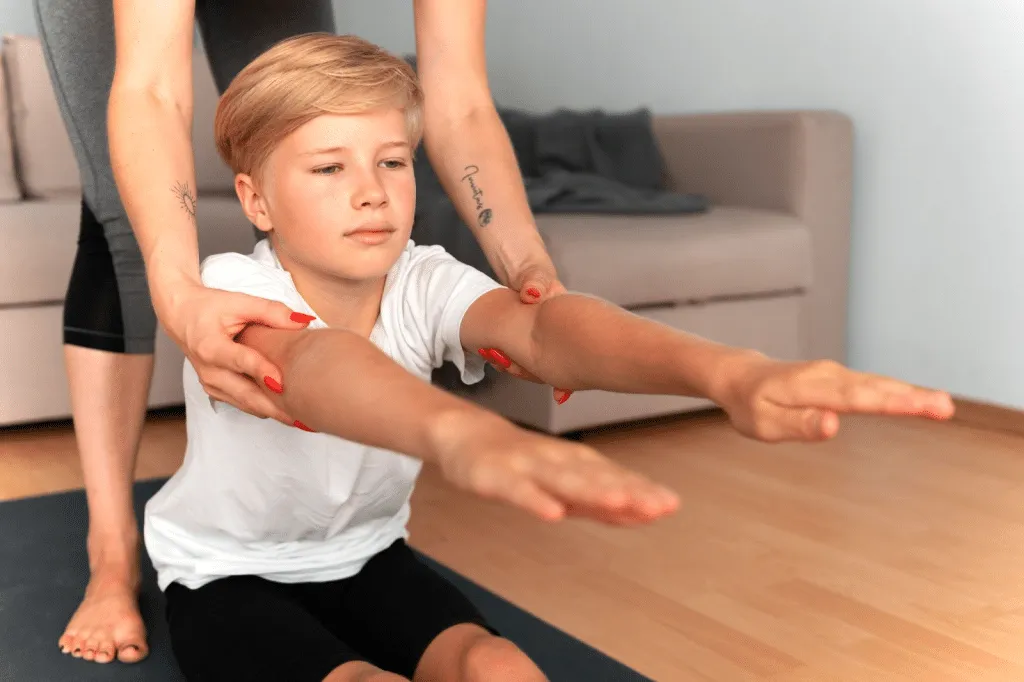
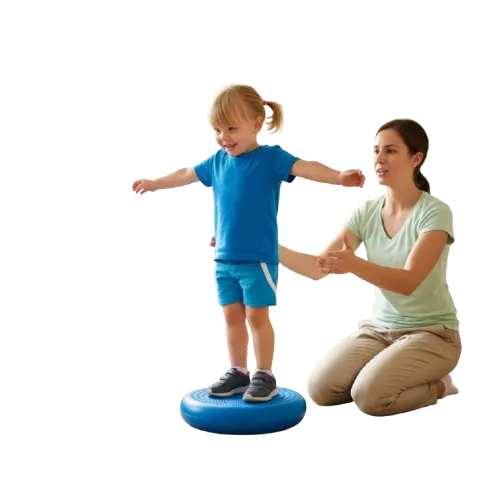
For example, the NDIS can fund physiotherapy for kids to help with mobility, posture, coordination, strength, and balance. If a child has difficulty walking or needs guidance with gross motor skills, physiotherapy may help them become more independent and safer.
At Leaping Kids, our NDIS physiotherapy for kids services are designed to integrate play-centred, evidence-based methods to increase confidence, improve movement, and support a child’s development in their usual environments (home, school, local park).
How Physiotherapy Helps Under NDIS for Children
Physical therapy has a meaningful role in a child’s development, especially when that child is supported under NDIS for children. Here’s how:
- Mobility & movement: stretching, strength training, balance exercises, gait training.
- Posture & alignment: guidance on posture to reduce fatigue, joint stress, or pain.
- Coordination & motor planning: helping a child plan and coordinate complex movements.
- Functional independence: training in transfers, sit-to-stand, safe navigation of surroundings.
- Confidence & participation: therapy occurs in real settings (home, school), so children can apply skills in day-to-day life.
Because Leaping Kids offers mobile paediatric physiotherapy in Sydney, we bring therapy to where your child is comfortable, whether that’s at home, school, or in the local environment. This direct integration ensures our services are closely aligned with the goals of NDIS support for children.
How to Apply NDIS Support for My Child
Here’s a practical step-by-step to guide parents through applying for NDIS for children:
- Contact
- For younger children, reach out to your local early childhood partner.
- For older children or those bypassing ECEI, contact your state’s NDIA access line.
- For younger children, reach out to your local early childhood partner.
- Gather documentation/evidence
You’ll need reports from health professionals that show:
- Diagnosis or articulation of developmental condition
- How the child’s impairment affects function (mobility, self-care, communication)
- Perhaps assessments or therapy reports (e.g. from physiotherapists)
- Specifically, physiotherapist reports can provide strong evidence on movement limitations, muscle strength, coordination issues, and anticipated gains from therapy. These reports help support your NDIS access request.
- Submit the Access Request
Fill out the NDIS Access Request form (or equivalent), attaching all evidence. The access decision timeline is usually 21 days; if extra information is requested, an additional 14 days may be granted. - NDIS decision & planning
If approved, you’ll move into planning. You and the NDIA will decide on supports to include in the child’s plan. - Implement your plan
Once the plan is active, you can engage providers (like Leaping Kids) to deliver supports funded under NDIS for children.
Frequently Asked Questions
How does NDIS help children with developmental delay?
By funding therapies, equipment, and specialist support to reduce the impact of developmental challenges and build a stronger foundation for future learning and independence.
What therapies can NDIS cover for kids?
NDIS can cover physiotherapy, occupational therapy, speech therapy, behavioural supports, assistive technology, and more, provided they meet the “reasonable and necessary” test.
Do you need a diagnosis for NDIS for children?
Not always, particularly in the ECEI pathway, younger children can access assistance without a formal diagnosis if developmental concerns are evident.
How do I apply for NDIS for my child?
Start by contacting either the early childhood partner (for younger children) or the NDIA access line. Then gather medical and therapy reports, complete the access request, and await the decision. Once accepted, supports can be planned and purchased.
Navigating NDIS support for children can feel overwhelming, but it doesn’t have to be. With clear steps, professional guidance, and the right supports, you can access funding that helps your child grow, move, and engage more fully in daily life.
At Leaping Kids, led by Natasha Ardiles (B.Med.Sc., M.Phty), we specialise in paediatric physiotherapy tailored to children with developmental delays or neurological needs. We are an NDIS-aligned provider offering mobile, in-home, or in-school therapy sessions across Sydney. Our family-centred, play-based approach ensures that therapy fits naturally into your child’s life and your family’s routine.
If you’re ready to explore how NDIS for children can support your child’s development, or want help in gathering the right evidence and navigating the application process, please contact Leaping Kids. We’re here to guide you every step of the way.