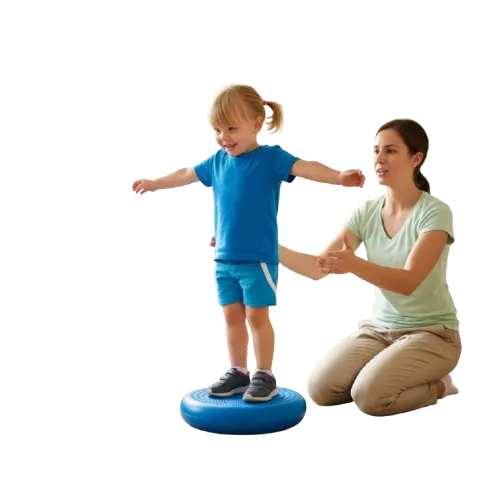
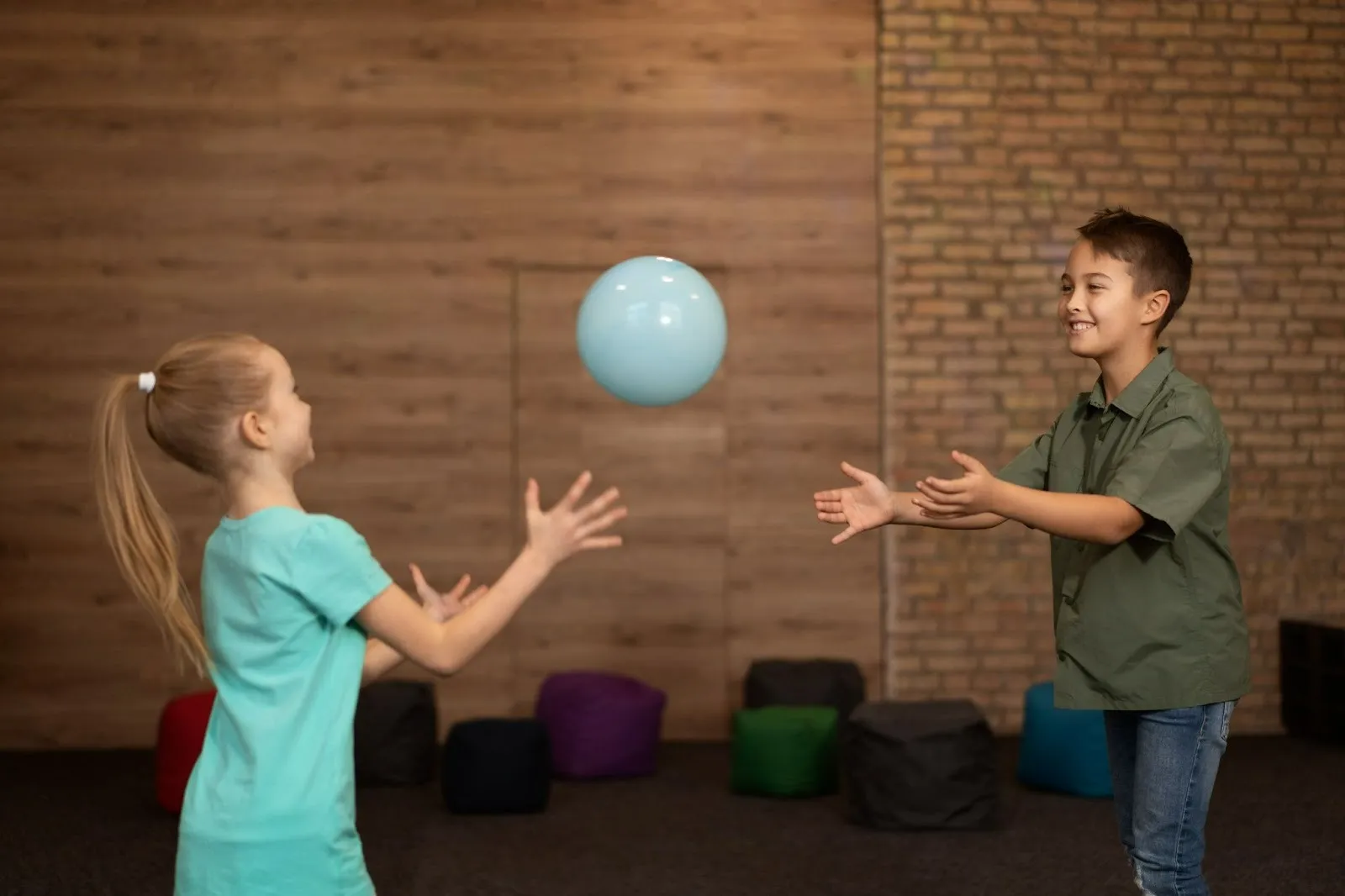
It’s worrying when a parent notices that their child struggles with simple movements other children manage easily. When you see repeated tripping, difficulty catching a ball, or trouble with self-care tasks, you may be seeing poor coordination emerging in a child. Recognising these signs early is important.
At Leaping Kids, based in Sydney and led by physiotherapist Natasha Ardiles (B.Med.Sc., M.Phty), we work with children who show signs of poor coordination and help them become stronger, more confident movers in familiar environments.
What Does Poor Coordination Look Like in a Child?
So what do we mean when we talk about poor coordination in a child? Simply put, it’s when a child’s ability to coordinate their body is noticeably behind what we’d expect for their age. You might see it in gross motor skills (running, jumping, kicking) or fine motor skills (writing, tying shoelaces, using cutlery).
For example:
- A preschooler who still topples over more often than peers and avoids climbing or playground games.
- A school-aged child who avoids ball games, struggles to catch a ball, or finds buttons and zips very hard.
- A child whose handwriting is very messy, or who takes much longer to finish tasks because of motor effort.
Because the term can feel formal, it can help to remember: poor coordination in a child is simply when coordinating movement and body-control is harder than expected. According to the developmental resource from the Raising Children Network, children with conditions like Developmental Coordination Disorder (DCD) “can find it hard to coordinate their bodies to do everyday tasks, like dressing themselves, writing neatly, running or riding a bike.”
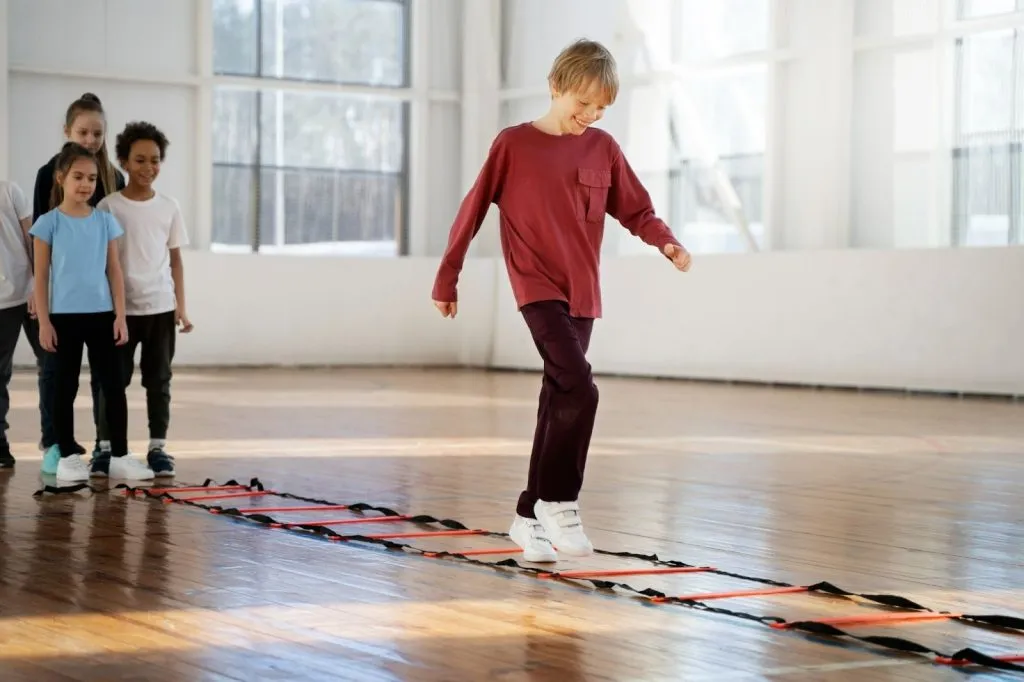
If you’re thinking your child may be lagging in movement, taking action matters, especially when you see persistent difficulties across different activities and over time.
Common Causes of Poor Coordination
There is no single cause for poor coordination in a child, but several common patterns emerge.
Developmental Coordination Disorder (DCD) is one major cause. DCD affects around 5% of children in Australia – about one child in every classroom. With DCD, children have significant difficulty planning, learning and executing movements, yet their intelligence is typically unaffected.
Other factors include:
- Neurological or sensory issues: If a child has atypical sensory processing or neurological differences, coordinating movement becomes harder.
- Motor-planning difficulties: Some children struggle to sequence movements or move in a controlled manner, even if the muscles are fine.
- Low strength or poor body awareness: Weak core strength or poor posture can also lead to a child’s movements being less controlled or coordinated.
- Sensory processing challenges: If a child is over- or under-sensitive to movement or body position, this can make coordination more difficult.
Importantly, because causes can overlap, children showing poor coordination may benefit from thorough assessment by a paediatric physiotherapist or occupational therapist to understand their individual profile.
How Poor Coordination Affects Everyday Life of a Child
When there is a poor coordination in child development, the impact reaches far beyond just physical movement. Here’s how it plays out:
- Mobility and strength: The child may avoid physical play, tire quickly, or struggle with movements such as climbing stairs or running at the same pace as peers.
- Play and social interaction: Because playground games often demand good coordination, children may opt out of play or avoid inviting others to play, which can affect friendships and confidence.
- School tasks and self-care: Fine motor coordination underpins handwriting, cutting with scissors, using buttons and zips. When these tasks are harder, the child may feel embarrassed or frustrated. One recent Australian survey found that more than 70 % of families of children with DCD reported major difficulties with self-care or drawing/writing tasks.
- Emotional and confidence effects: Repeated failure or the perception of being “clumsy” compared to peers can damage self-esteem, cause avoidance of activities and increase anxiety around movement or group play.
Left unaddressed, poor coordination in a child might lead to a child limiting their participation in sport or movement, reducing physical fitness, and potentially impacting long-term health and wellness.
What Parents Can Do at Home
If you notice signs of poor coordination in your child, here are practical steps you can take at home:
- Monitor developmental milestones but don’t become anxious. Use milestone checklists (from credible sources) as guides not guarantees.
- Encourage play-centred movement: Choose activities that are fun but movement-rich. Obstacle courses in the lounge, throwing/catching games, hopping, skipping, climbing, all build coordination, body awareness and strength.
- Break tasks into small steps: If buttons or shoelaces are tricky, practice them one step at a time, allow extra time and reinforcement.
- Collaborate with professionals: If coordination difficulties persist, speak with your GP or a paediatric physiotherapist. Early intervention helps. According to the national body DCD Australia, early recognition of this kind of movement difficulty is still low among parents and educators in Australia.
- Create consistency: Whatever strategies the therapist suggests, carry them into home and school so your child’s practice is repeated, meaningful and relevant.
By taking these steps, you’re ensuring that the early flags of poor coordination don’t turn into long-term limitations.
How Paediatric Physiotherapy Helps Children with Poor Coordination
At Leaping Kids in Sydney, our specialised paediatric physiotherapy approach is tailored for children developing coordination challenges. When a child shows poor coordination, targeted physiotherapy can help build strength, refine movement skills and support independence, in the environments they feel safest (home or school).
Here’s how it works:
- We begin with an individual assessment of your child’s mobility, strength, balance and coordination.
- From there we design a play-centred therapy programme that feels like fun rather than a clinical chore, helping children engage and practise.
- Therapy in familiar settings (mobile, in-home or in-school sessions) means your child builds skill where they live and learn, making transitions smoother.
- We integrate family and school engagement: goals are set realistically, then we help you carry strategies into daily life so the gains carry from session to playground and classroom.
Our focus is early intervention, balance and coordination building, and ultimately empowerment: children with poor coordination can learn to move confidently, participate actively, and enjoy life with more independence.
Families and Schools Working Together to Support Progress
Coordination issues are not just the child’s challenge, they’re a team matter. When families and schools support each other, the gains from therapy translate into real-world success.
- Families: Talk regularly with your child’s therapist and share what is happening at home. Encourage movement opportunities, celebrate effort not just outcome, and maintain a consistent approach.
- Schools: Liaise with teachers and support staff about how your child’s coordination difficulties show up in class. Simple adaptations (extra time for tasks, modified movement breaks, alternative seating) can make a significant difference.
- Therapist-School Link: When a physiotherapist and educators coordinate, the child’s gains in therapy move into the classroom and playground. That means improvements in coordination don’t stay confined to the therapy room, they show up in everyday life.
By aligning home, school and therapy, children developing poor coordination are far more likely to reach meaningful, sustainable improvements.
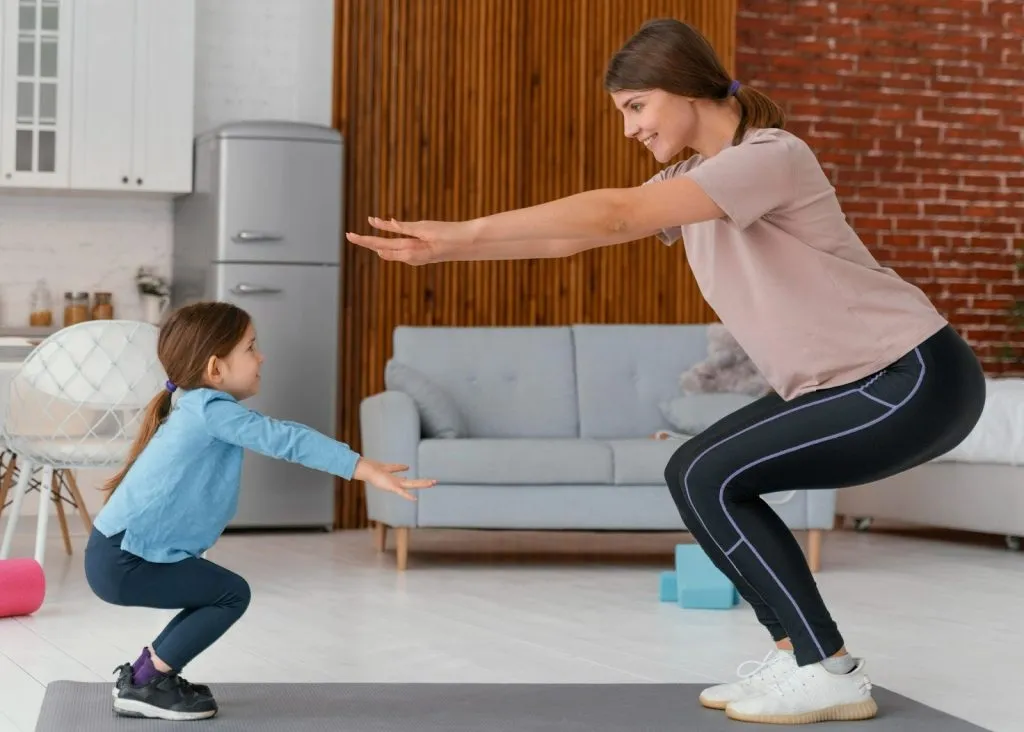
Noticing poor coordination in a child early on does not have to spark immediate alarm, but it does call for observation and action. When children struggle to keep up with movement expectations, it impacts not just play and sport, but confidence, school tasks and everyday independence.
The good news is that with targeted, professional help, especially in early childhood, a child’s coordination can improve. Our team at Leaping Kids in Sydney specialise in helping children with coordination challenges through individually tailored, play-centred physiotherapy.
If you’re seeing the signs and wondering what to do next, you don’t have to wait: early intervention offers the best chance for your child to build strength, coordination and confidence.