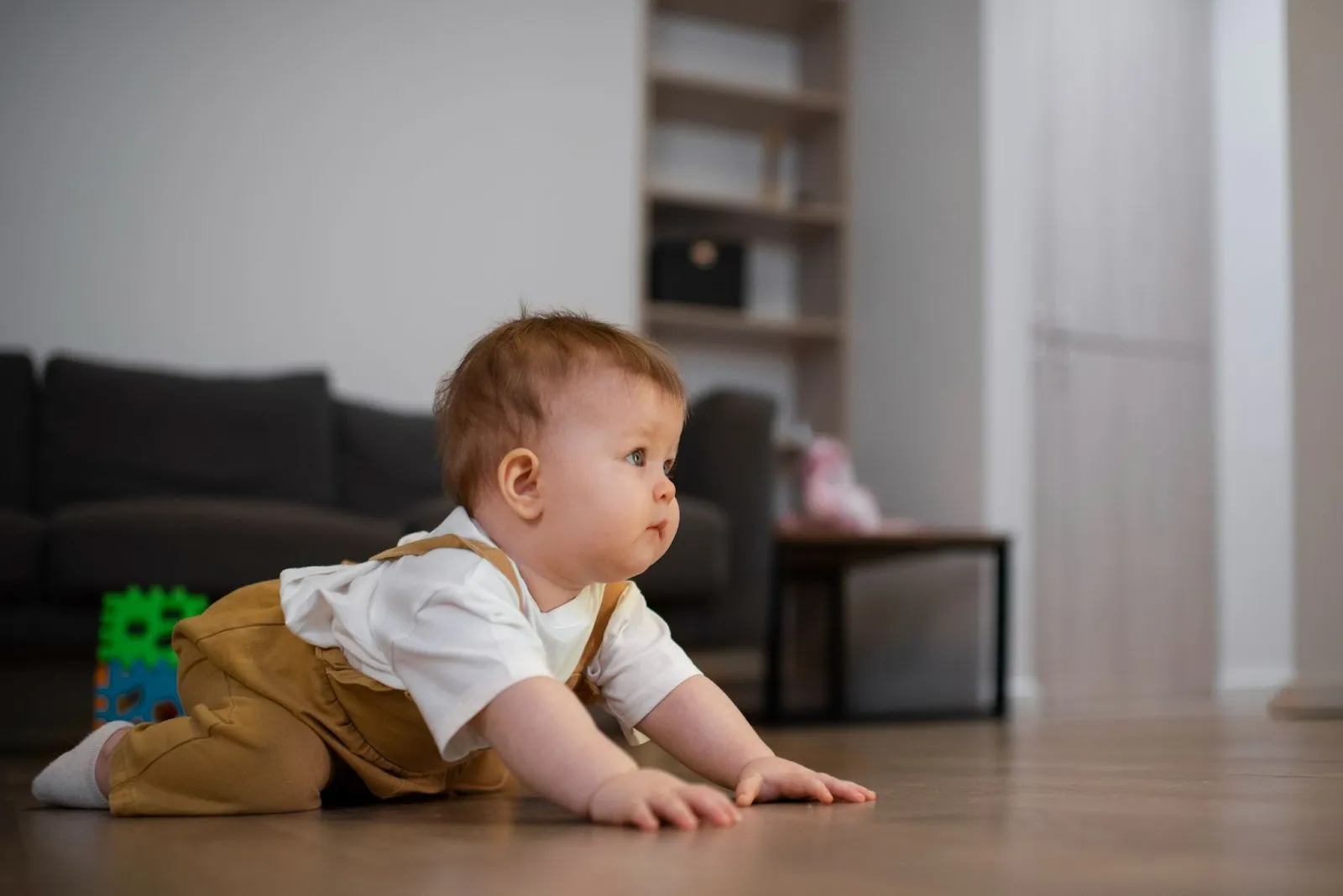
Watching your baby grow and reach new milestones is one of the most exciting parts of parenthood. Few moments are as memorable as seeing those first wobbly steps. But for many parents, questions often arise: when do babies start walking, what’s considered “normal,” and when should I be concerned if my child hasn’t started yet?
At Leaping Kids, we work with families across Sydney to support children through key motor milestones. In this guide, we’ll explore the typical age babies begin walking, the stages leading up to it, red flags for delay, and how parents and physiotherapists can help children progress confidently.
When Do Babies Start Walking?
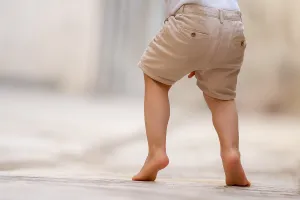
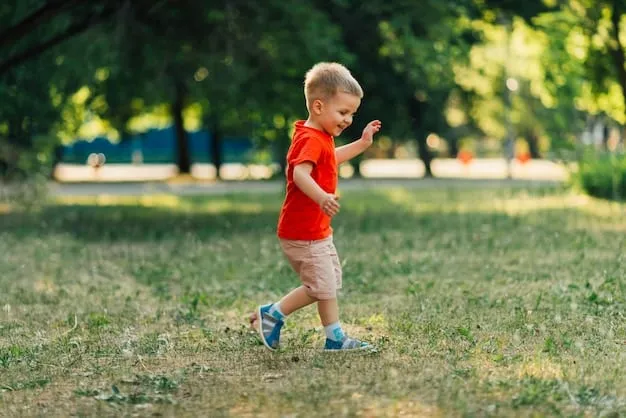
Most parents are keen to know exactly when do babies start walking, but the answer isn’t the same for every child. The typical range is between 9 and 18 months. Some infants may take their first steps closer to 9 or 10 months, while others are content to crawl or cruise until well after their first birthday.
It’s important to remember that variation is normal. Factors like muscle strength, balance, coordination, temperament, and opportunities to practise all influence when babies start walking. Some babies are risk-takers who try to walk as soon as they can pull themselves upright, while others are more cautious and wait until they feel completely steady.
So if you’ve been wondering, “when do infants walk” or “when does an infant start walking”, the key takeaway is that walking typically falls within a broad window. Being a few months earlier or later doesn’t automatically mean something is wrong.
Stages Leading to Walking
Walking doesn’t happen overnight. It’s the result of a series of developmental milestones that build strength, coordination, and balance. Before you see your baby taking independent steps, they’ll usually move through these stages:
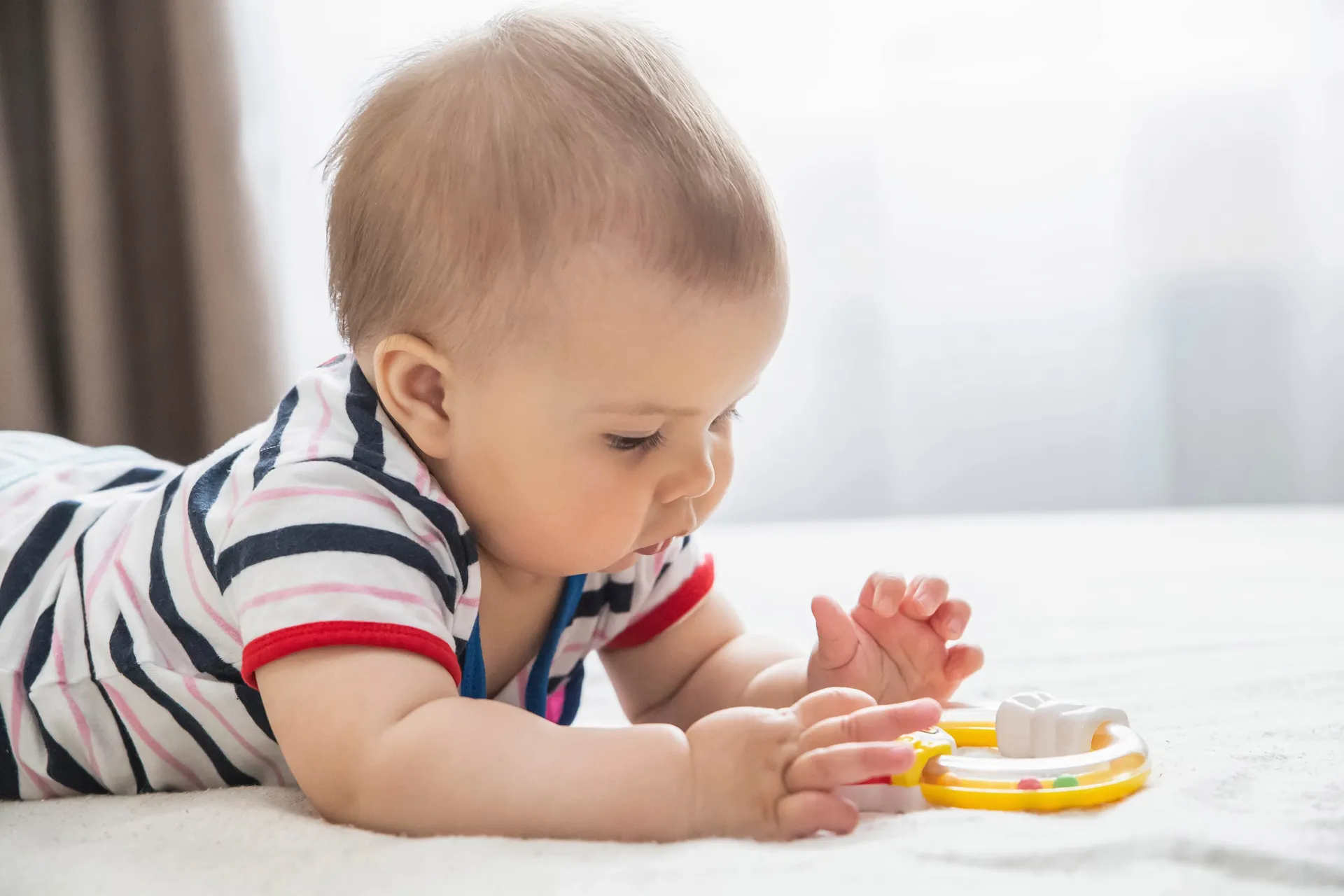
- Rolling and Sitting – Early mobility begins with rolling, which helps strengthen the core. Sitting independently follows, improving trunk control.
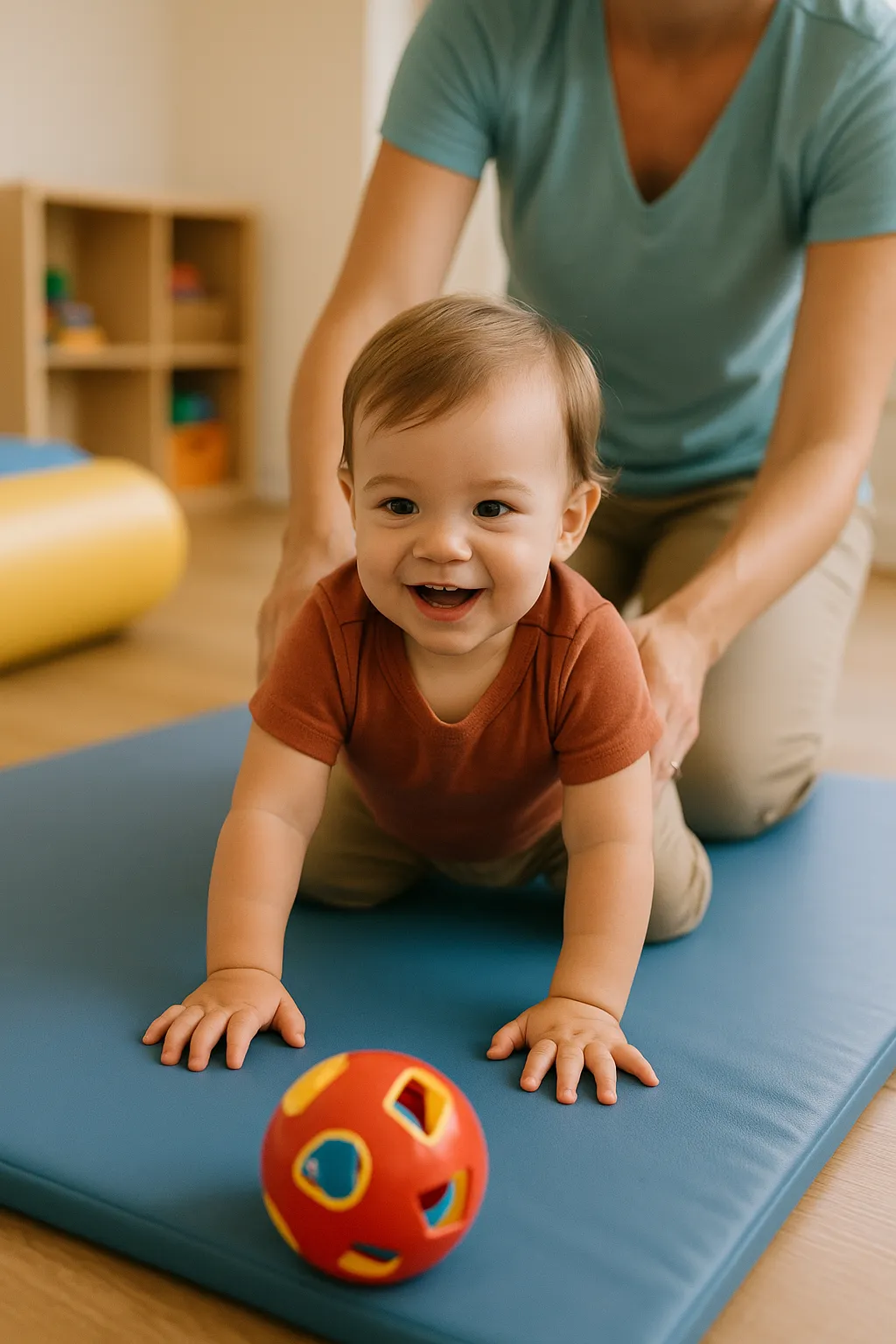
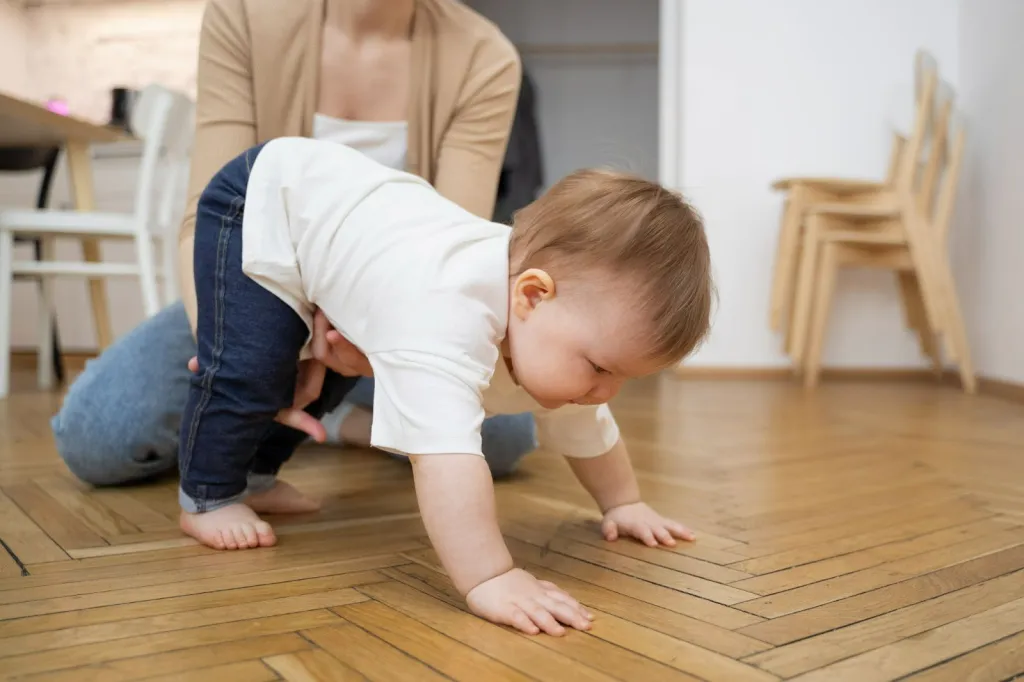
- Crawling – Crawling builds arm and leg strength while coordinating left and right sides of the body.
- Pulling to Stand – Babies use furniture or your hands to pull themselves upright, developing leg strength.
- Cruising – Moving sideways while holding onto furniture gives practice with weight shifting and balance.
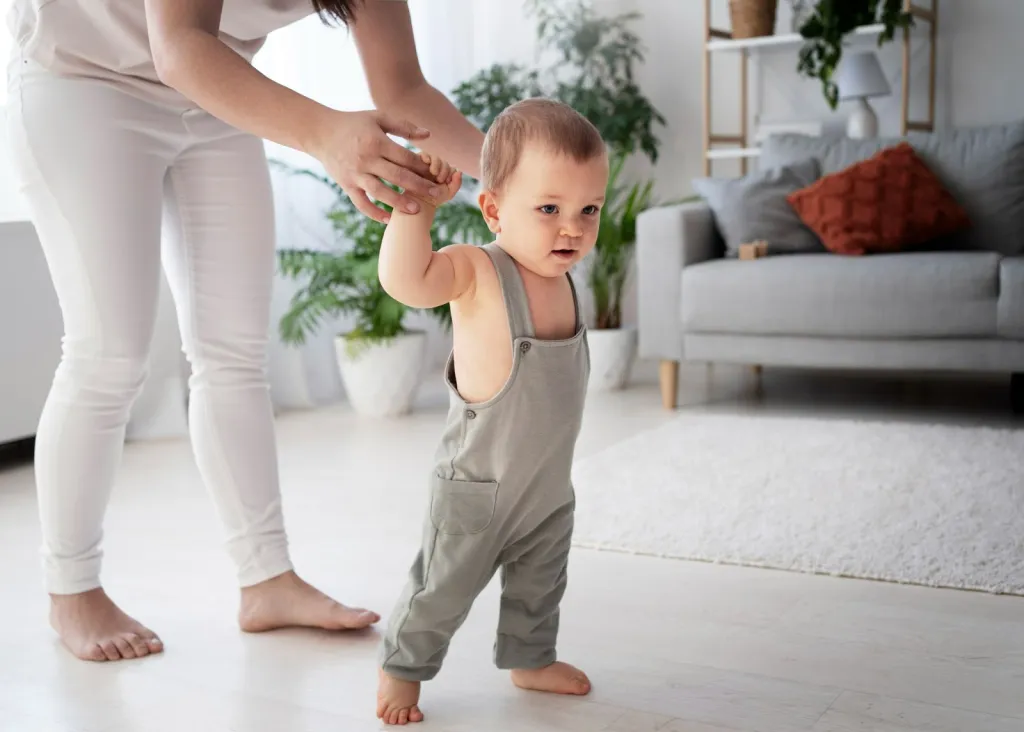
- Independent Standing and Walking – After weeks or months of practice, babies let go and attempt their first steps.
According to the Australian Government’s Raising Children Network, babies progress through these stages at different times, but each stage is an important stepping stone to walking.
Understanding these stages can help parents see that even if their baby isn’t walking yet, important progress is still being made.
Red Flags for Delayed Walking
While every child develops at their own pace, there are some signs that may suggest further assessment is needed. Parents often ask, “when should baby walk independently?” A common guideline is that if a child isn’t walking by 18 months, it’s worth seeking professional advice.
Other red flags include:
- Very stiff or very floppy muscle tone.
- Persistent asymmetry, such as using one side of the body much more than the other.
- Lack of interest in weight-bearing or standing.
- Regression in skills (e.g., a child who could pull to stand but no longer can).
These signs don’t always mean something is seriously wrong, but they do warrant checking in with a GP or paediatric physiotherapist. Early support can make a significant difference in helping children reach their potential.
How Paediatric Physiotherapy Supports Walking
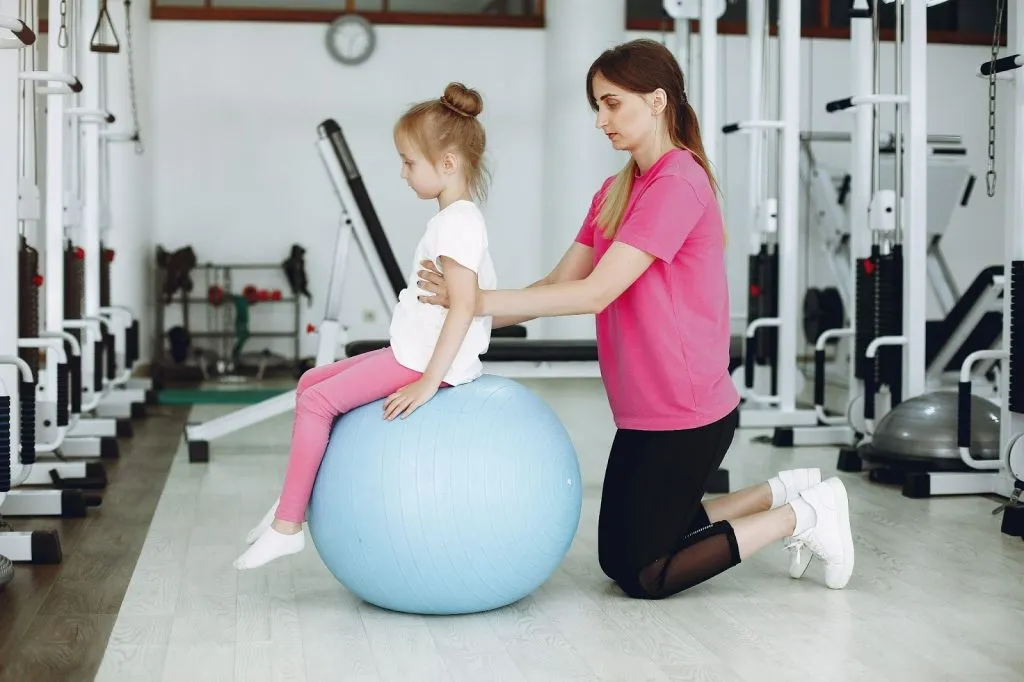
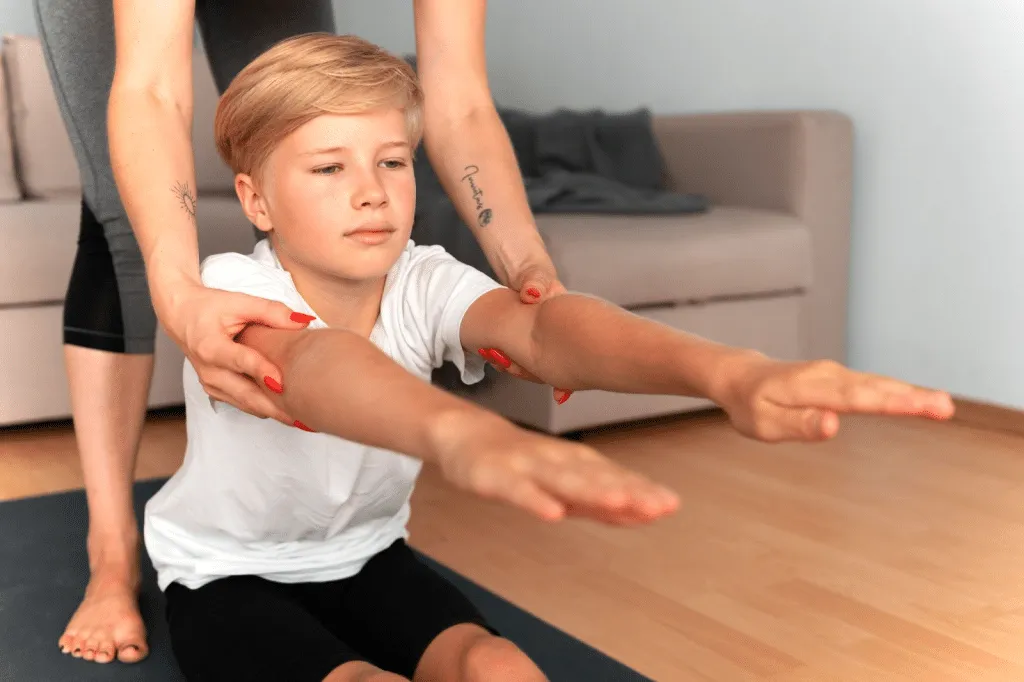
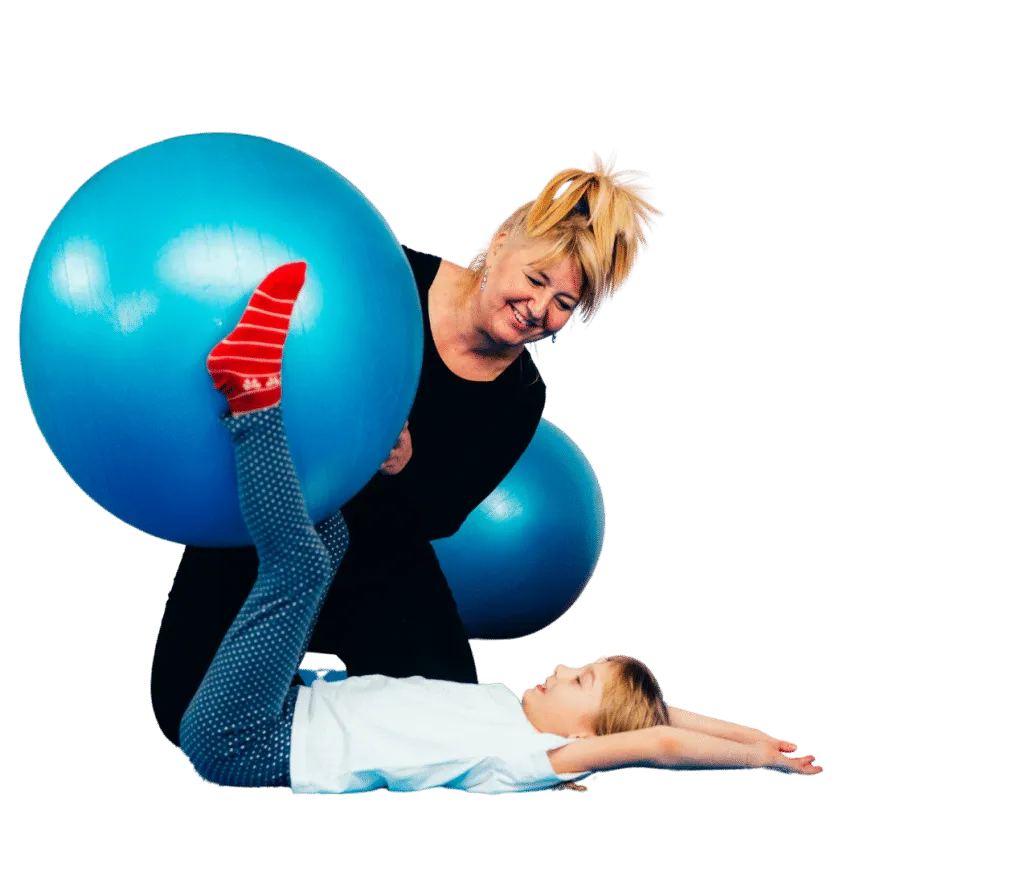
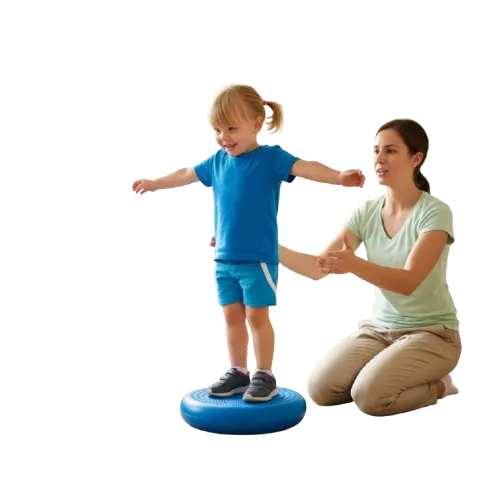
For families concerned about delayed walking or uneven development, paediatric physiotherapy offers structured support. At Leaping Kids, our therapy is tailored to each child’s individual strengths and challenges.
Physiotherapists focus on building the skills needed for walking:
- Balance – helping babies shift weight confidently from one foot to the other.
- Strength – developing muscles in the legs, hips, and core.
- Coordination – practising movements that bring everything together.
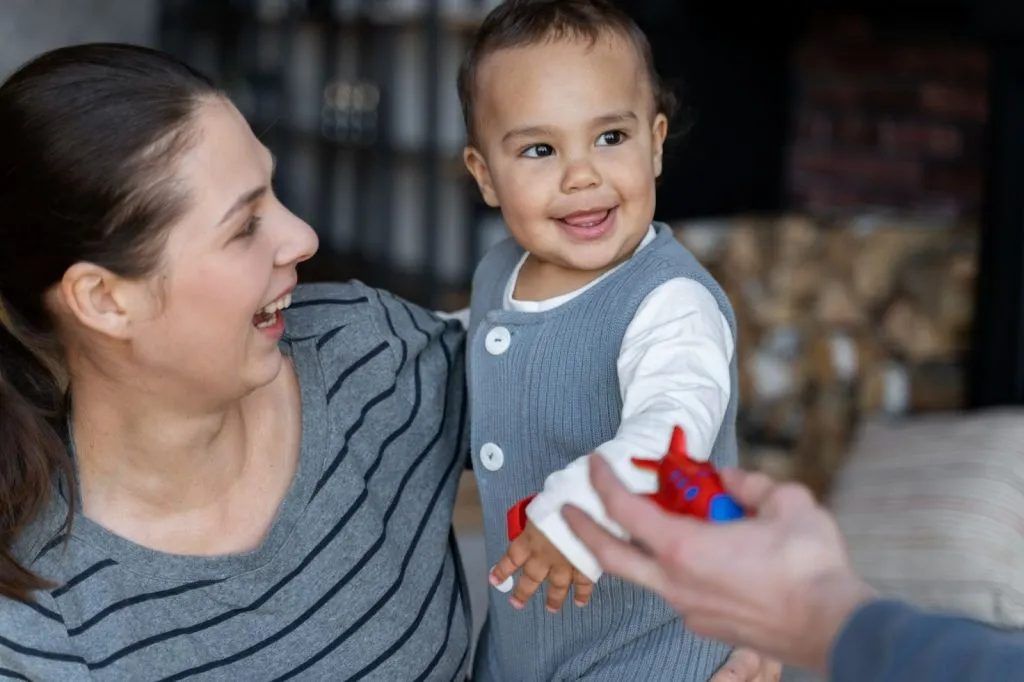
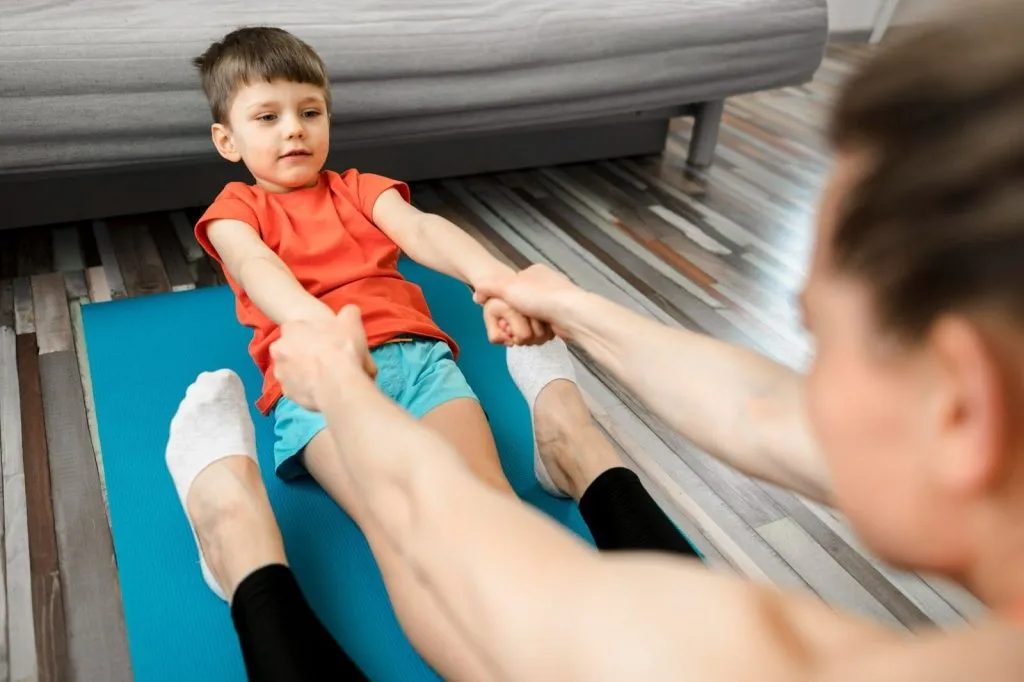
Importantly, therapy sessions are play-based. Children learn best when they are engaged and having fun. Activities like reaching for toys, playing on soft mats, or exploring safe climbing surfaces are all part of physiotherapy designed to encourage baby walking.
How Parents Can Encourage Walking at Home
Parents play a big role in helping babies practise safely. Here are some strategies you can use to encourage baby walking without pushing your child too quickly:
- Encourage Floor Play: Allow plenty of time on the floor, not confined to prams, walkers, or jumpers. This builds natural strength.
- Safe Furniture Cruising: Provide sturdy furniture for your baby to hold onto while cruising. Make sure it’s secure and won’t tip.
- Play Outdoors: Walking on different surfaces like grass or sand builds balance and coordination.
- Follow Your Baby’s Pace: Avoid forcing steps before your child is ready. Gentle encouragement and play are most effective.
By creating a safe and engaging environment, you give your child the best chance to develop confidence in their own time.
Early Intervention and the Leaping Kids Approach
Sometimes babies need more than encouragement at home. When delays are significant, early intervention is crucial. The earlier children receive support, the more effectively they can develop functional skills and independence.
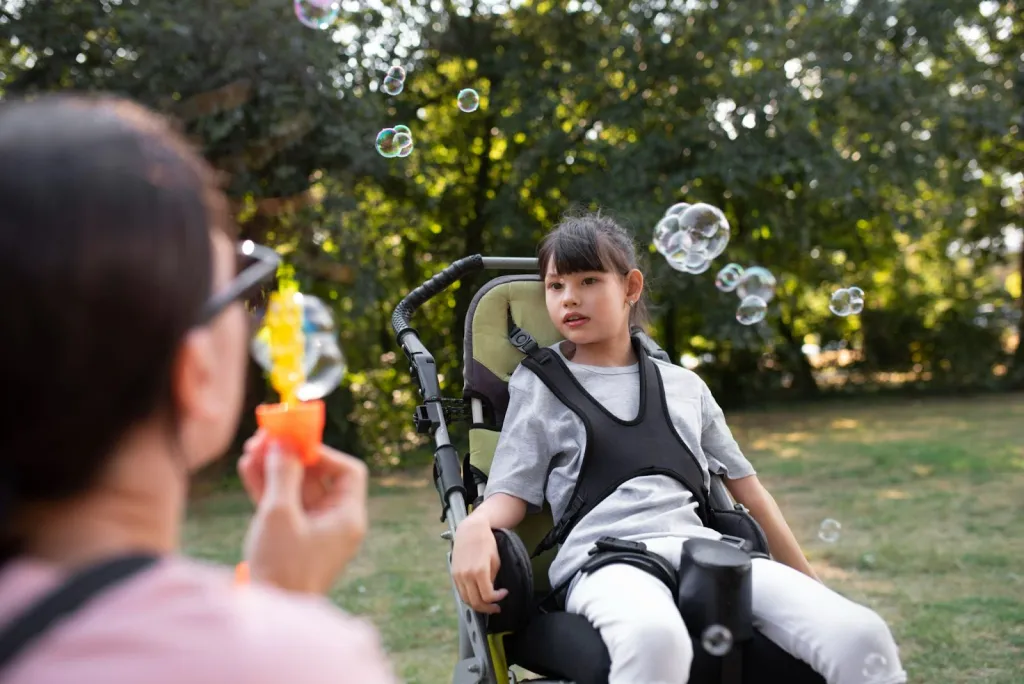
Leaping Kids provides specialised paediatric physiotherapy across Sydney, designed for children with developmental and neurological challenges. Our sessions are mobile, meaning therapy can happen in your home, school, or childcare setting where your baby feels most comfortable.
As an NDIS provider, we also support families in accessing funded therapy, ensuring children have every opportunity to progress confidently through their milestones. Our holistic approach involves not just the child, but the whole family, building strategies that support long-term growth and independence.
So, when do babies start walking? Most take their first steps between 9 and 18 months, with plenty of variation in between. Walking is the product of many smaller milestones, and while some children need extra time, others may benefit from professional support if delays persist.
If you’re concerned about your baby’s progress or want to explore how paediatric physiotherapy could help, Leaping Kids is here to guide your family every step of the way.